

Vino Nobile di Montepulciano was in 1980 among the very first Italian DOCGs, alongside Barolo and Brunello. It is made around the town of Montepulciano in south-eastern Tuscany from Sangiovese — known locally as Prugnolo Gentile — at a minimum of 70 per cent, the balance being Canaiolo, Mammolo or other permitted varieties.
The misunderstanding concerns the name. Montepulciano is also the name of a grape, the one behind Montepulciano d'Abruzzo, which has nothing whatever to do with this appellation: different variety, different region, different wine. Here Montepulciano is the town, and the grape is Sangiovese. It is probably the confusion that has cost the appellation most in recognition.
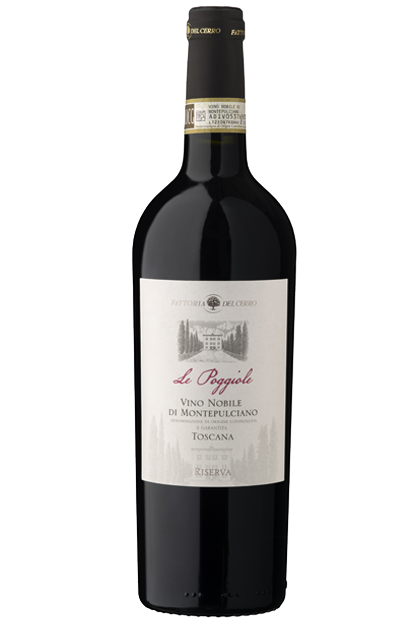
Minimum aging is two years, three for the Riserva. The style sits between Chianti Classico and Brunello: warmer and more structured than the former, less severe and more approachable than the latter, with the dark fruit and earth typical of Sangiovese in this part of Tuscany. Rosso di Montepulciano DOC is the young version, released after a few months.
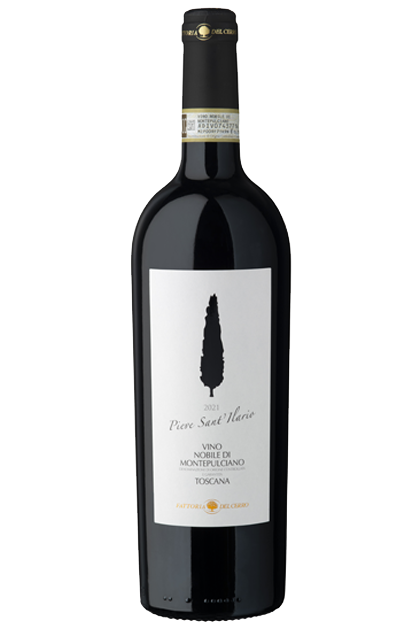
Since 2020 there is also Vino Nobile di Montepulciano Pieve, a superior category created to give weight to the historic sub-zones, using fruit from registered vineyards only and requiring longer aging.