

In 1966 Vernaccia di San Gimignano became the first denominazione di origine controllata awarded in Italy. Not one of the first: the first. It was promoted to DOCG in 1993. That the founding document of the Italian system covers a Tuscan white rather than a Barolo or a Chianti is the fact that most surprises people who discover it.
The grape is called Vernaccia di San Gimignano and must make up at least 85 per cent of the wine. The name misleads: "vernaccia" is an old, generic term applied across half of Italy to grapes with no relation to each other. Vernaccia di Oristano is an oxidative Sardinian wine; Vernaccia di Serrapetrona is a sparkling red from the Marche. All they share with this appellation is the word.
The historical record is unusually rich for a white wine. Vernaccia appears in the town's own documents as early as the fourteenth century, and Dante mentions it in the Purgatorio in connection with Pope Martin IV, who was rather too fond of it. For centuries it was the prestige wine exported by a town that lives on its towers.
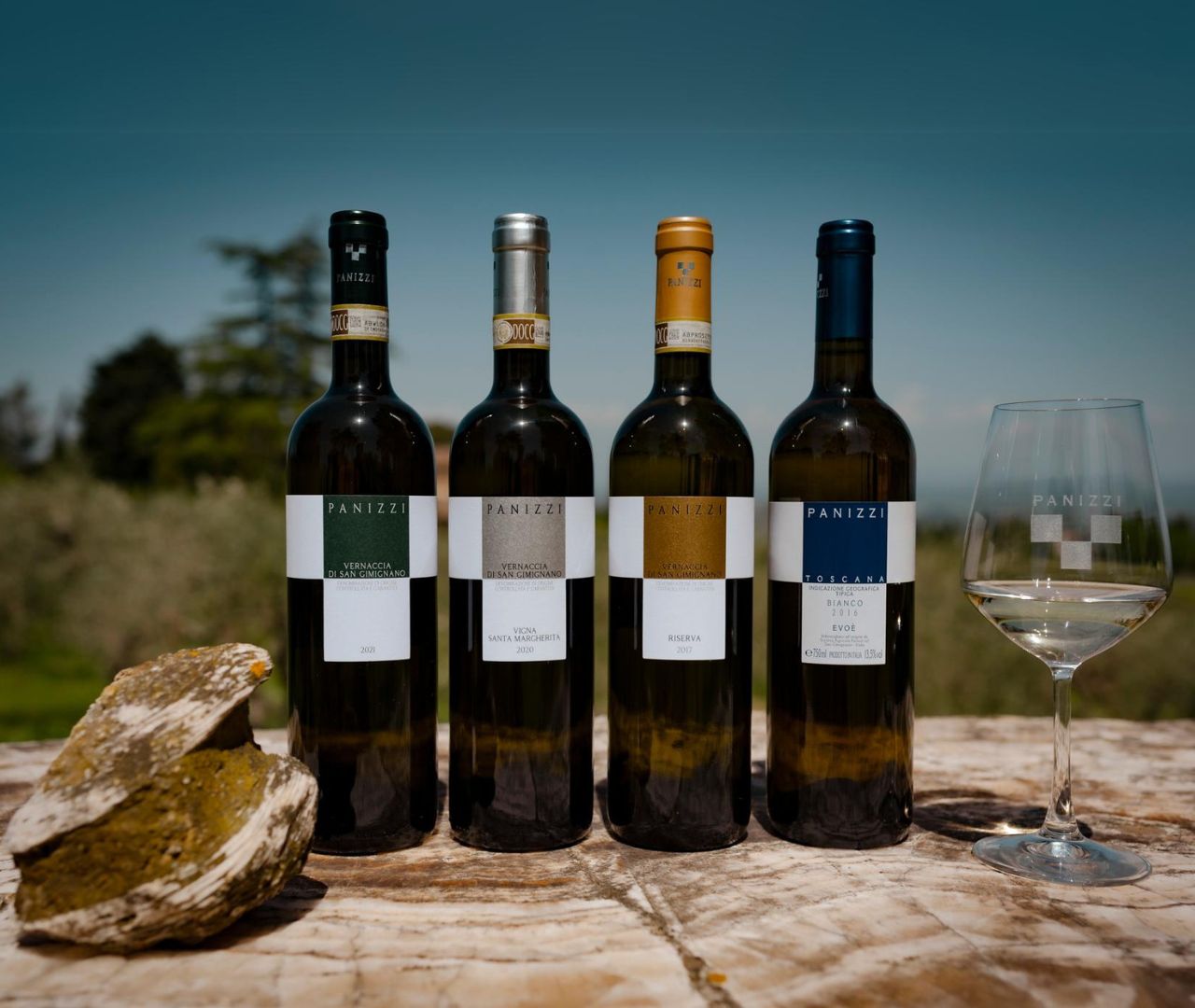
In the glass it is a dry, medium-bodied white with a saline thread and an almond-bitter finish that is its clearest signature. The Riserva requires at least eleven months of aging plus three in bottle and takes a few years well, which contradicts the habit of drinking every Tuscan white within the year.

.png/Vernaccia ANNATA - SENZA SFONDO(1)__360x659.png)