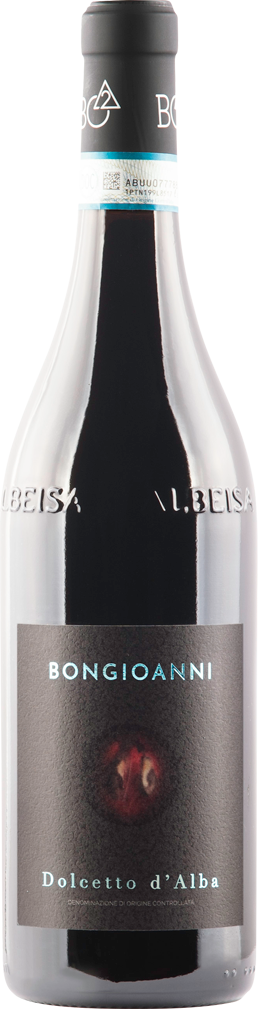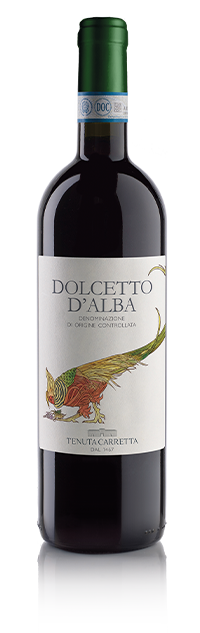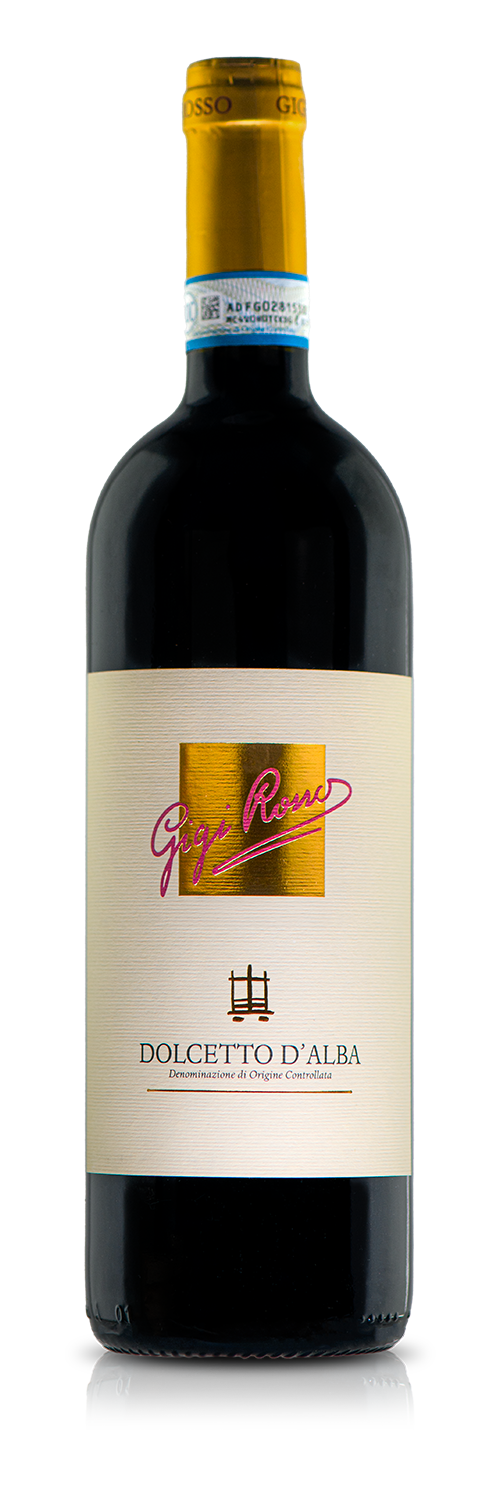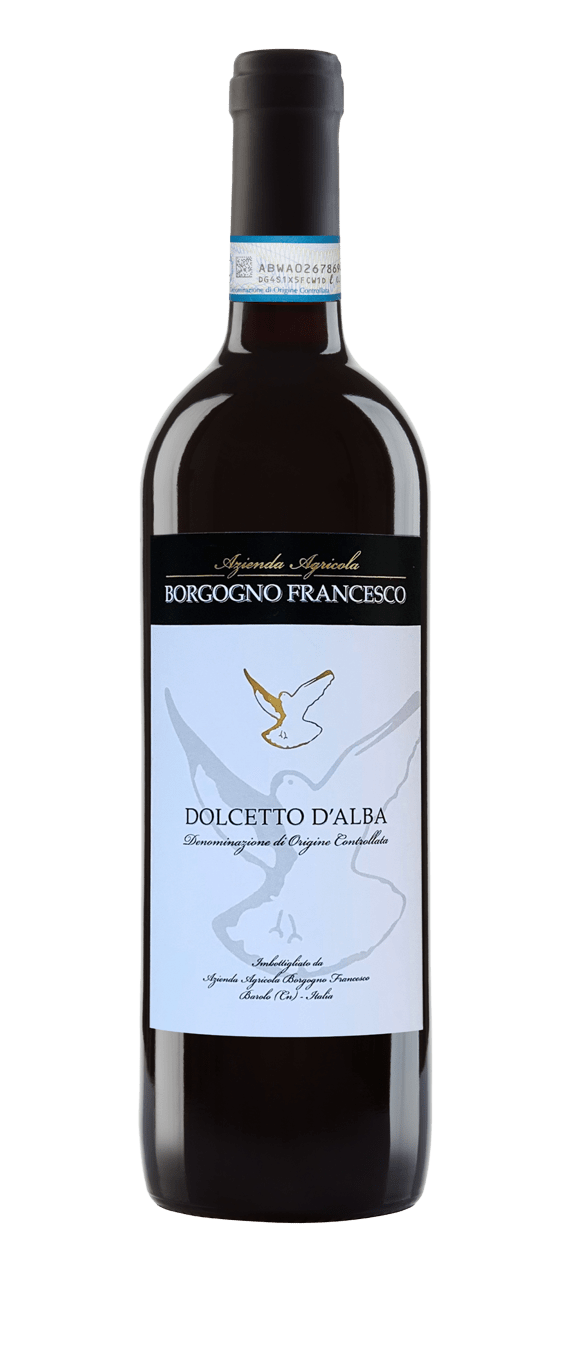


Dolcetto is Piedmont's third grape by plantings, after Barbera and Nebbiolo, and its name misleads almost everyone. The wine is dry. The diminutive refers to the grape, which ripens early and has sweet, pleasant flesh to eat, not to what ends up in the glass.
Its profile is the opposite of Barbera's: where Barbera has high acidity and low tannin, Dolcetto has moderate acidity and noticeable tannin, often finishing with a faint almond bitterness. The result is a deeply coloured red of black fruit and violets, direct and ready, asking for no patience.
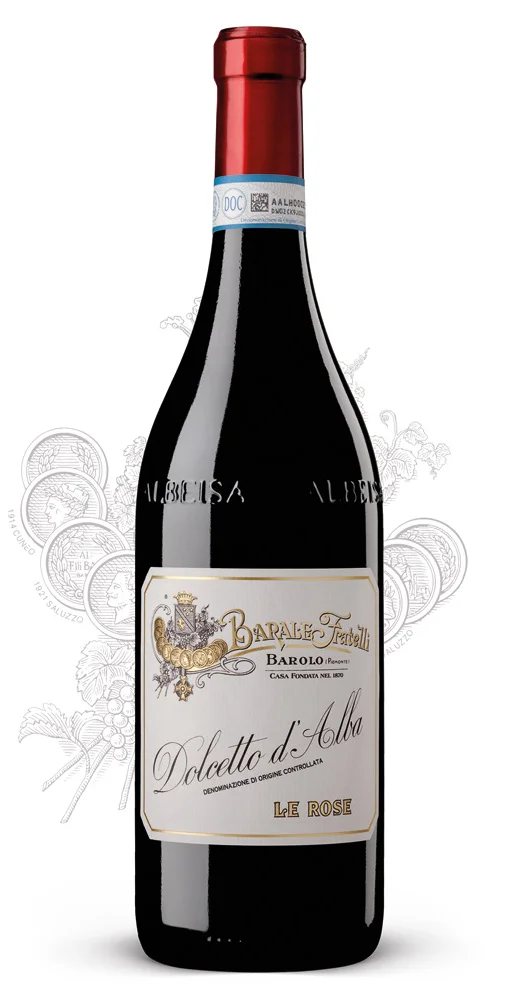
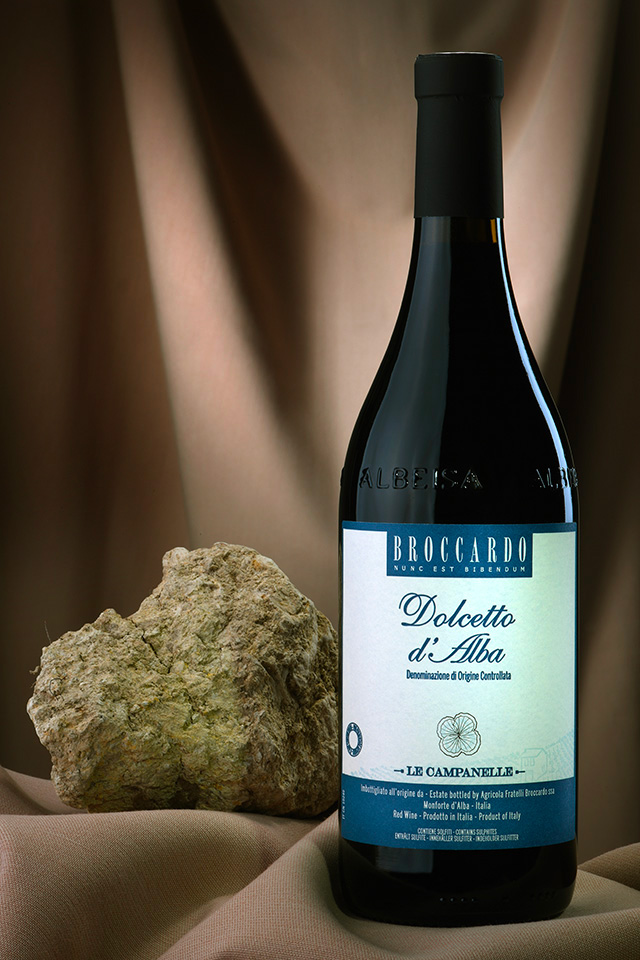
The main appellations are Dolcetto d'Alba and Dolcetto di Diano d'Alba, and above all Dogliani, which since 2005 has dropped the grape name from its label to stand as a territorial denomination — that is where Dolcetto reaches its greatest concentration. Dolcetto di Ovada, in the province of Alessandria, is the other name to know.
In the Langhe, Dolcetto occupies a precise position: it is planted where Nebbiolo would not ripen properly, and drunk within two or three years while the Barolo sleeps in the cellar. It is the house wine of Barolo producers, and should be judged by that standard.