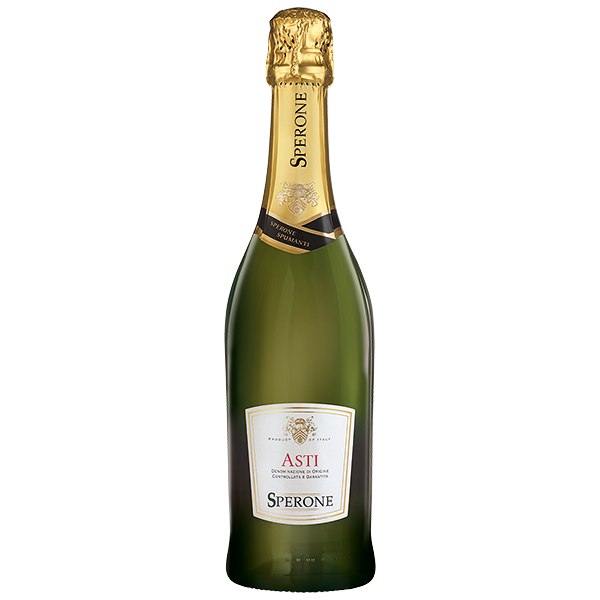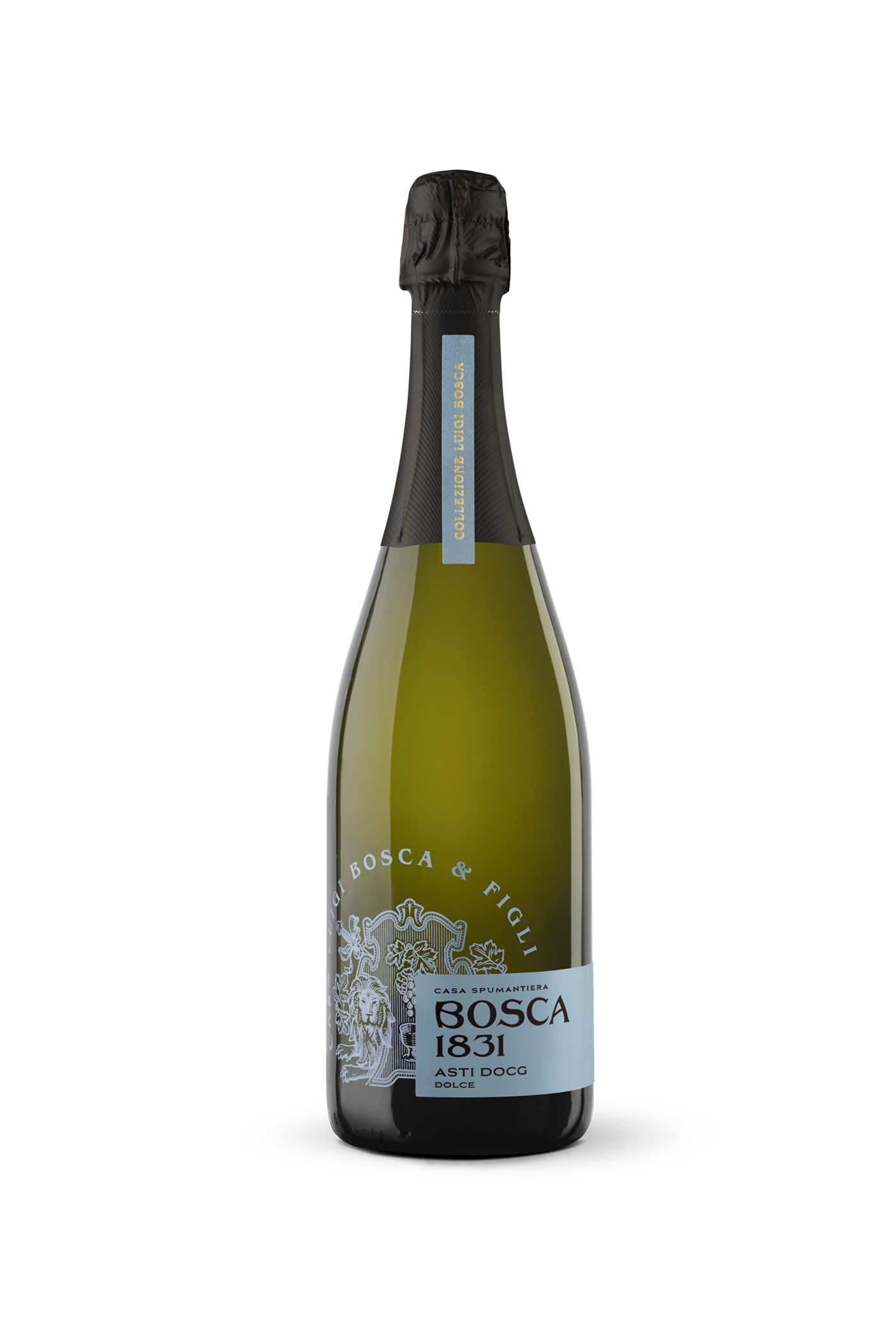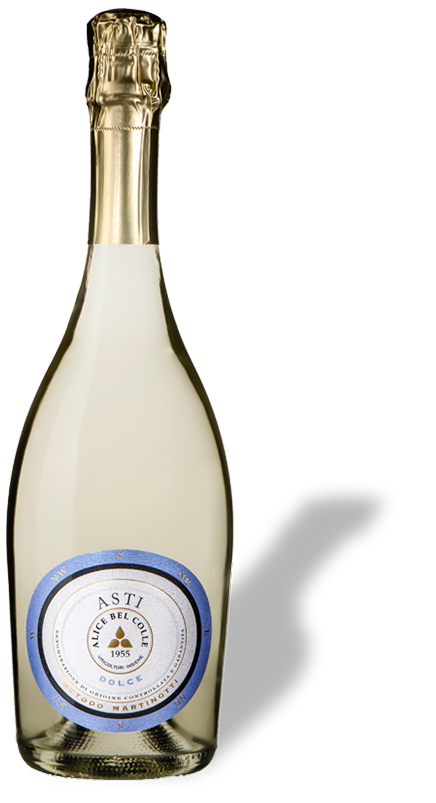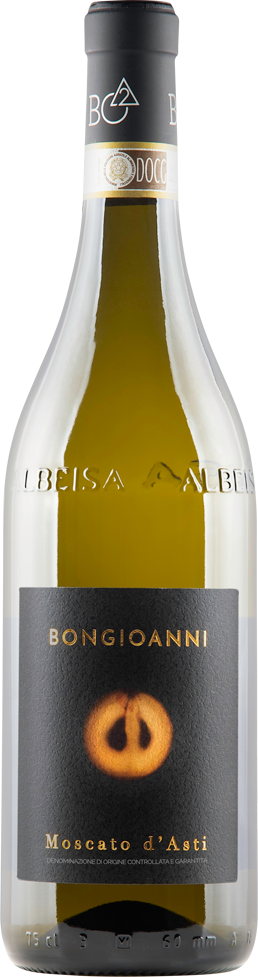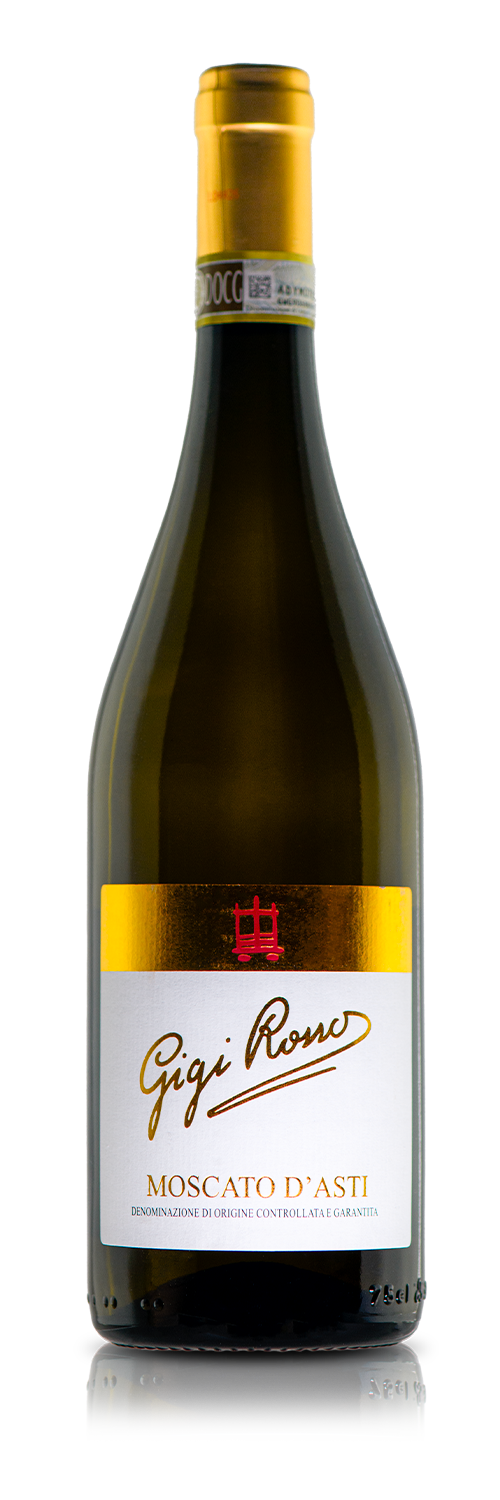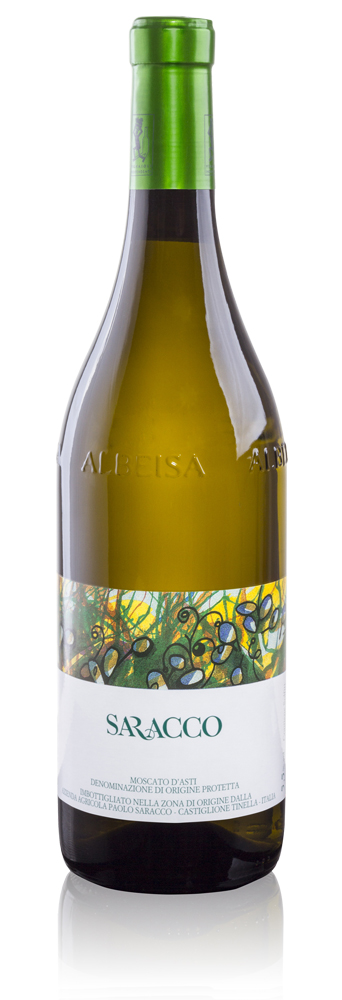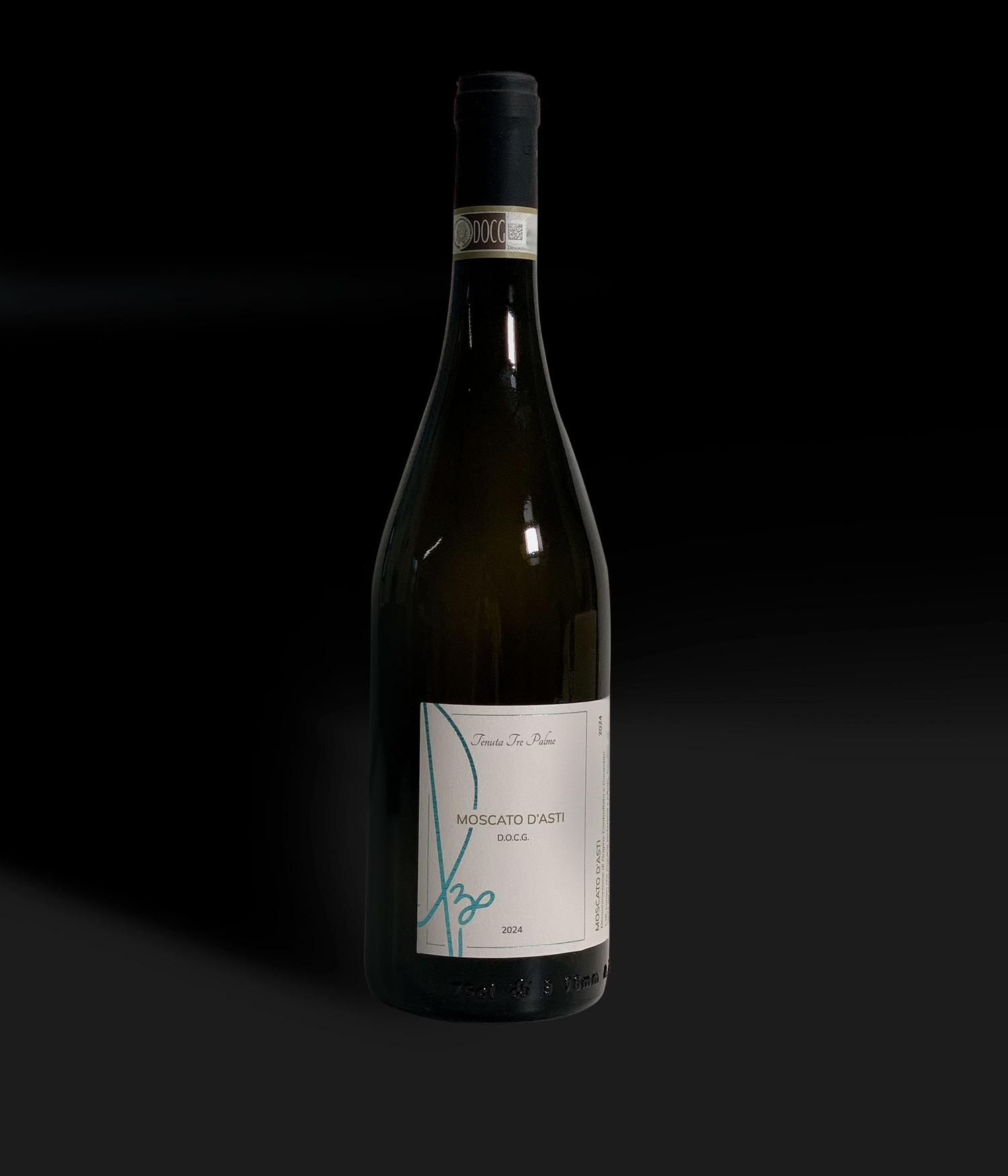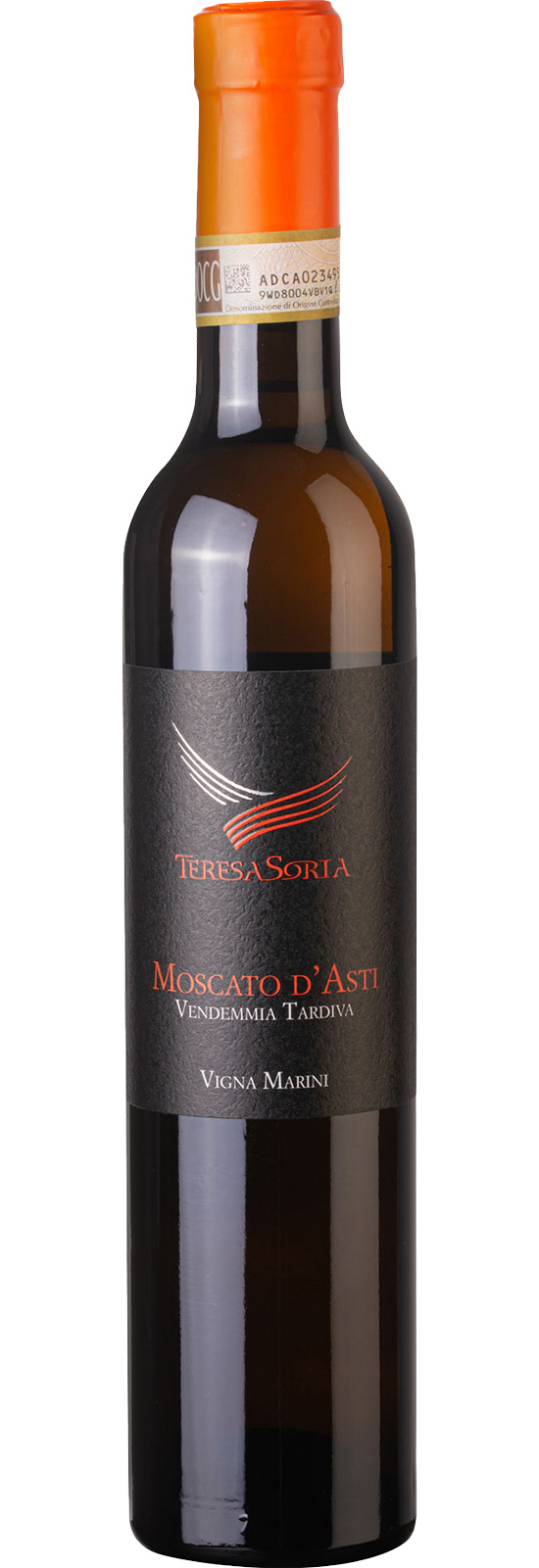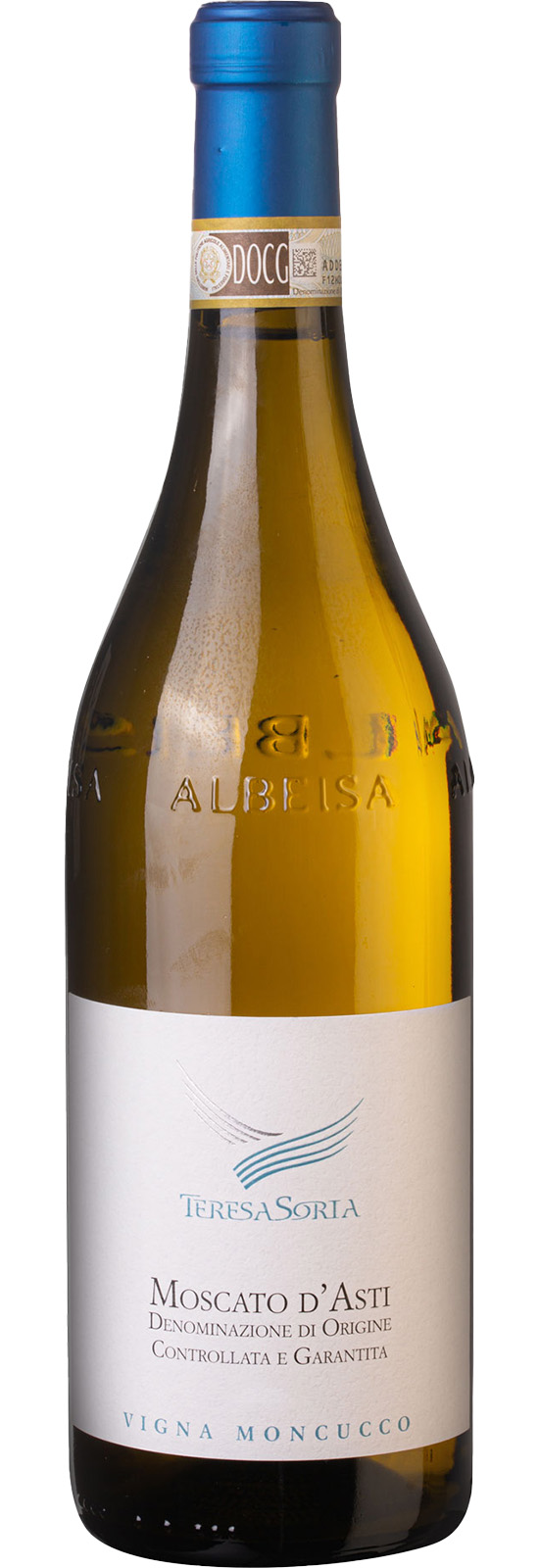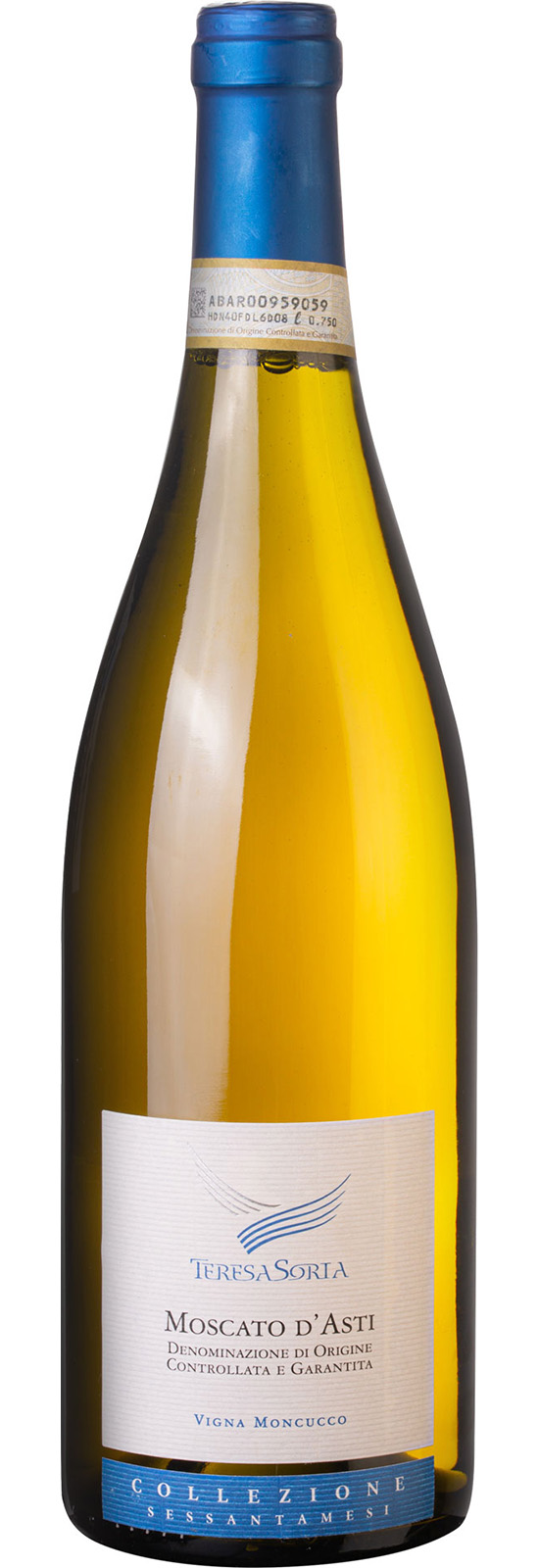


Asti DOCG, recognised in 1993, covers the hills across the provinces of Asti, Cuneo and Alessandria and rests on a single grape, Moscato Bianco. Two rather different wines shelter under the same rules. Asti Spumante is fully sparkling, bottled at full pressure, at around 7 per cent alcohol. Moscato d'Asti is frizzante, sealed at under 2.5 atmospheres, and stops at about 5 per cent.
Both come from an interrupted fermentation: the must is chilled before the yeasts have consumed all the sugar, so the sweetness that remains is natural rather than added. In Moscato d'Asti the interruption comes earlier, which is where the low alcohol, the gentle bead and the aroma of fresh grapes, sage and orange blossom all come from — Moscato Bianco expresses that better than almost any other variety.
The great virtue of these wines is proportion. Five per cent alcohol and a clean, unheavy sweetness make them workable at the end of a meal where any other dessert wine would be too much. Asti Secco has been permitted since 2017, and in 2023 Canelli became its own DOCG, formally recognising the historic heart of the zone.